
sound_bath_group

The Healing Power of Sound: Why Vibrations Calm the Mind & Body

There are moments in life when words fall short—when the stress we carry can’t be reasoned away, when the body feels heavy, and the mind won’t stop racing. I stumbled into sound healing during one of those moments. I didn’t know what to expect, but the experience changed how I understand rest, healing, and even silence.

Sound healing is both ancient and surprisingly simple: pure tones, vibrations, and resonance that reach places within us that talking, thinking, or analyzing rarely can. Long before we had the language of “nervous systems” or “stress hormones,” cultures across the world knew that sound could soothe, restore, and connect us. From Tibetan singing bowls in the Himalayas to gongs in Asia, to the steady rhythm of drums in Indigenous traditions—sound has always been medicine.

The Science of Vibration

We usually think of sound as something we hear with our ears. But the truth is, sound is vibration, and vibration moves through the body just as easily as through air.

Modern science shows that these vibrations can directly influence our parasympathetic nervous system—the part responsible for slowing the heart rate, lowering blood pressure, and guiding us out of “fight or flight.” When you’re bathed in sound, your body is gently nudged into a state of relaxation. The mind follows, letting go of looping thoughts and softening into stillness.

Some researchers call this the “frequency effect.” Different tones can resonate with different parts of the body, helping energy to flow and tension to dissolve. But you don’t have to understand the science to feel it—the body knows, and often responds before the mind does.

A Personal Experience

The first time I lay down in a sound bath, I was fascinated by how the vibrations affected not just my mind but my entire body. The soothing tones seemed to move through me, softening tension I didn’t even realize I was carrying. My whole system—mind and body—began to relax in a way I hadn’t experienced before. That moment became the starting point of my journey with sound healing. I found myself wondering: what is this, and how does it work so deeply?

What began as curiosity turned into a new path of discovery in my life. Over time, sound healing not only helped me return to my own center, but also inspired me to guide others in finding peace, balance, and release—without relying on anything harmful, only the gentle power of sound and vibration.

Benefits of Sound Healing

The beauty of sound is that it meets you exactly where you are. Some of the most common benefits people notice include:

Physical ease – muscles soften, breath deepens, heart slows

Stress relief & relaxation – melting tension in both body and mind

Improved sleep – many report deeper, longer rest after a session

Emotional release – gentle space for tears, joy, or clarity to surface

Mental clarity – thoughts feel lighter, less tangled

Why It Matters Today

We live in a culture that prizes productivity, noise, and constant motion. Our bodies weren’t built for this kind of pace. No wonder so many of us are exhausted, anxious, and craving stillness.

Sound healing isn’t about escaping reality—it’s about remembering balance. The vibrations remind the body what calm feels like. They create space for us to simply be, without needing to fix, perform, or achieve.

An Invitation

You don’t need to believe in anything mystical to experience the effects of sound. All you need is a willingness to listen, not with your ears, but with your whole self.

If you’ve been curious, or if you’ve been carrying stress that feels too heavy to name, consider giving sound healing a try. Come with an open heart, a comfortable blanket, and no expectations. The sounds will meet you where you are—and maybe, like me, you’ll leave feeling lighter than when you arrived.

Untitled design (1)

What to Expect in Your First Sound Bath

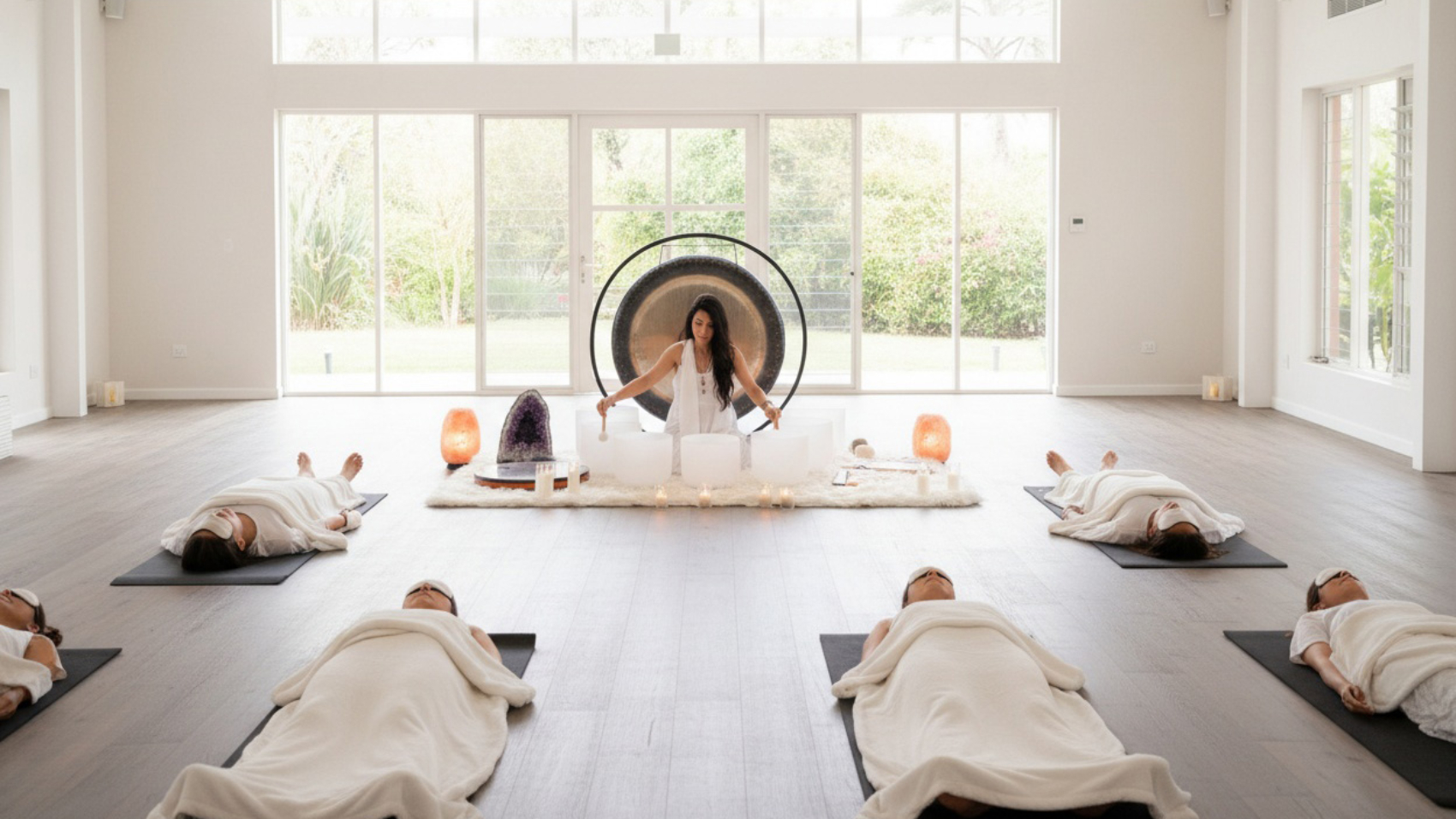
When I first heard the phrase sound bath, I imagined warm water, candles, and maybe music in the background. What I didn’t expect was lying down fully clothed on a yoga mat, wrapped in a blanket, and being carried by waves of sound instead of water. That first experience shifted something in me, and I’ve since seen the same quiet transformation in countless others who walk through the door for the very first time.

What Is a Sound Bath, Really?

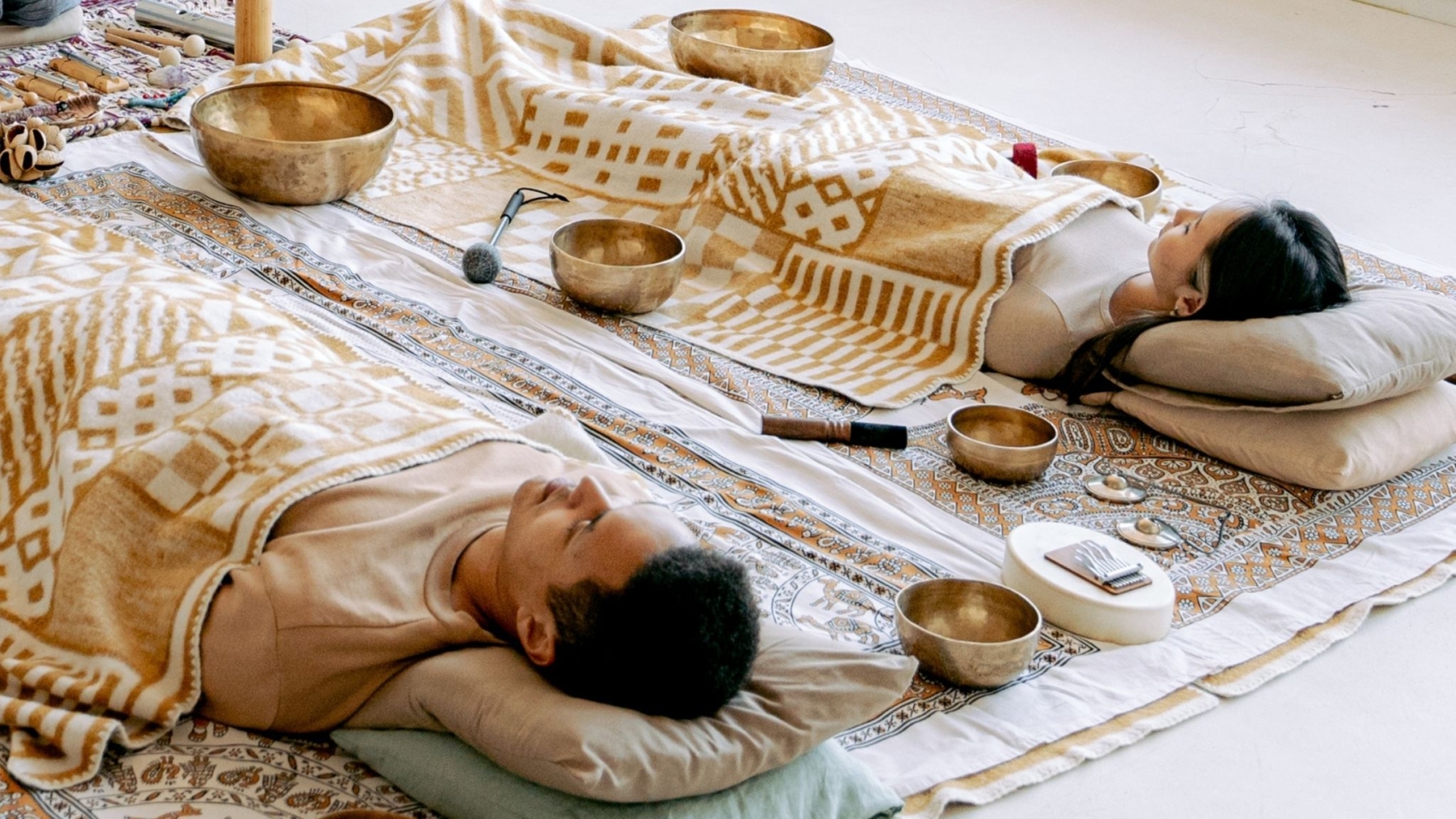
Despite the name, there’s no water involved. A sound bath is simply an immersive experience where you “bathe” in sound and vibration. Practitioners use instruments like crystal singing bowls, gongs, chimes, or pyramids to create resonant tones that fill the space and move through the body.

Unlike a concert, this isn’t about performance. It’s not about listening to music—it’s about letting sound move through you. The tones aren’t structured melodies but continuous vibrations designed to help the body and mind release tension and enter deep relaxation.

What It Feels Like

The truth is: no two sessions are ever exactly the same. Some people feel tingling sensations in their arms or legs, as if the sound is vibrating right through them. Others describe an emotional release—tears flowing unexpectedly, or a sudden lightness in the chest. Some simply fall asleep and wake feeling as though they’ve just had the deepest rest in years.

For me, that first sound bath felt like a reset button had been pressed. My mind, usually busy with lists and worries, grew still. My body, often tight with tension, softened. It was subtle but powerful, and the effects lingered for days.

Tips for Your First Sound Bath

Wear comfortable clothing. You’ll be lying down for 45–60 minutes, so choose something soft and easy to relax in.

Bring a blanket or eye mask. These small comforts help you settle in and drop deeper into the experience—especially if they aren’t provided at the spac

Arrive hydrated. Water supports the flow of energy in the body and makes it easier to process the vibrations.

Set an intention. This doesn’t need to be complicated. It could be as simple as “I want to feel calm” or as specific as “I’m ready to release stress from my week.”

Let go of expectations. Every sound bath feels different. Some sessions bring deep rest, others bring emotional release. The more open you are, the more you’ll receive.

Common Benefits

First-timers often leave surprised by how much shifted in just one session. Some of the most common benefits include:

A sense of balance and returning to center

Deep relaxation that feels restorative

Improved sleep for nights afterward

Clarity and focus, as though mental fog has lifted

Release of tension in both body and emotions

Your Journey Begins

Walking into your first sound bath might feel a little unfamiliar, but the experience itself asks nothing of you. You don’t need to “do it right,” meditate perfectly, or even stay awake. Your only job is to lie down, close your eyes, and allow the sound to carry you.

And sometimes, that’s the most healing part—realizing that you don’t have to try so hard. Sound will meet you exactly where you are.

So if you’ve been curious, consider this your invitation. Bring yourself, as you are, and step into the gentle embrace of sound. You might just discover a new way back to yourself.

Untitled design (2)

The Role of Intention in Healing Journeys

When we step into a healing space—whether it’s a sound bath, meditation, or even a simple breath practice—something shifts the moment we set an intention. It’s like planting a seed in the soil of your own heart. That seed may be small, but with focus and care, it begins to grow into real change.

I didn’t always understand the power of intention. At first, I would come to sound baths simply looking to “relax” or “feel better.” But over time, I noticed that the sessions where I whispered a quiet intention to myself—peace, clarity, letting go—were the ones that carried me deeper. The sound seemed to meet me there, amplifying whatever I had asked for.

Why Intention Matters

Our energy follows our focus. When we’re caught in stress, worry, or distraction, our nervous system mirrors that state—racing thoughts, shallow breath, restless sleep. But when we take a moment to name what we need, something changes.

Intention is not about control; it’s about direction. Think of it like adjusting a compass. Without it, we might wander aimlessly. With it, even the smallest step brings us closer to the place we want to go.

In sound healing, intention works beautifully because the vibrations help carry that focus deeper into both body and spirit. It’s as if the sound waves give your intention wings.

Simple Intentions to Try

If you’re new to this practice, here are a few intentions you might bring with you into a session:

  • “I invite peace into my mind and body.”
  • “I release what no longer serves me.”
  • “I open myself to clarity and guidance.”
  • “I choose compassion—for myself and others.”

You don’t need fancy words. Your intention can be as short and simple as a single word: rest, balance, courage, love.

How to Set an Intention

Pause before your session. Take a few quiet breaths and notice what you’re feeling.

Ask yourself what you need. Maybe it’s relaxation, or maybe it’s the strength to move through something difficult.

Speak it gently to yourself. Whisper it in your heart, or say it silently in your mind.

Let it go. Trust that the sound and your own energy will carry it where it needs to go.

A Personal Reflection

I remember one session where my intention was simply, “I want to let go.” I didn’t even know what exactly I was holding on to. But halfway through, lying under the waves of crystal bowl vibrations, I felt tears rolling down my face. It was as if my body knew how to release before my mind caught up. Afterward, I felt lighter—not because I had “solved” anything, but because I had given myself permission to let go.

That’s the gift of intention. It doesn’t have to be perfect or even fully clear. It just has to be honest.

Your Own Journey

If you’ve been searching for a way to feel more connected, balanced, or at peace, I invite you to try setting an intention before your next sound bath or meditation. It could be as simple as, “I want to rest.” Let that guide you, and allow the sound to do the rest.

Healing doesn’t always come in big, dramatic moments. Sometimes it begins with something as soft and small as an intention—one that opens the door back to your center.

Untitled design (5)

The Power of Group Healing

There’s something profound that happens when people come together with a shared intention to heal. On our own, we can find peace, clarity, and strength—but in a group, those same qualities often deepen, multiply, and ripple through everyone present.

I’ve seen this time and time again during sound baths and healing circles. A person might walk in carrying the weight of their week, shoulders heavy, face drawn. Yet, as the session unfolds, the collective energy begins to shift. The sound rises, vibrations fill the space, and you can almost feel the room breathing together. By the end, the same person often looks lighter, softer, more open.

Why Groups Matter in Healing

Humans are wired for connection. Long before modern wellness practices, communities gathered in song, ritual, and shared silence. Group energy has always been medicine.

Science even confirms it: when people meditate, breathe, or rest together, their brainwaves and heart rhythms can synchronize. It’s called entrainment, and it explains why being in a healing group can feel so different from being alone. The energy magnifies, and what one person releases can inspire others to let go, too.

What Makes Group Healing Powerful

  • Shared Intention. When a group comes together with a common purpose—peace, release, balance—the effect is amplified.
  • Collective Support. Even without speaking, being surrounded by others reminds us we’re not alone.
  • Energy Resonance. Vibrations from instruments and from the group itself move more deeply in shared spaces.
  • Emotional Safety. Sometimes it’s easier to soften when others around us are doing the same.

Taking the Experience with You

Group healing doesn’t stop when the session ends. Many people leave feeling more connected, not just to themselves, but to others. That sense of belonging—of being witnessed in your journey—can be just as healing as the sound itself.

In any group session, something extraordinary often happens: when one person opens up, the rest of the group leans into the healing with even more openness. Emotions that have been carried for months, sometimes years, begin to release. It’s never just about one person’s healing—it becomes a shared experience of the group holding space for one another.

If you’ve been curious about sound baths or hesitant to try them, consider starting with a group. There’s comfort in knowing you’re surrounded by others who are also seeking peace, balance, and clarity. Together, you may find the experience is richer, deeper, and more powerful than you expected.

Untitled design (6)

Sound Healing for Stress and Anxiety Relief

You could not have thought that joining college will be such a game changer. After all, in high school you dStress has a way of creeping into our lives quietly, until one day it feels like it’s everywhere—tightening the shoulders, shortening the breath, and filling the mind with endless noise. For many of us, anxiety has become so familiar that it feels normal. But it doesn’t have to be this way. Sound healing offers a gentle, natural path to release stress and bring the body and mind back into balance.

How Stress Lives in the Body

We often think of stress as mental—worries, overthinking, that restless buzz in the mind. But stress always shows up in the body too:

  • Muscles tighten without us noticing
  • The heart beats faster
  • Breathing becomes shallow
  • Sleep becomes restless

When stress lingers, the nervous system stays in “fight or flight” mode. Over time, this constant state of alertness can drain our energy and leave us feeling disconnected from ourselves.

The Sound Healing Effect

Sound works differently than talking, reasoning, or problem-solving. Vibrations bypass the busy mind and go straight into the body. Instruments like crystal bowls, gongs, or chimes create resonant frequencies that help guide the nervous system into a calmer state—activating the parasympathetic response, the body’s natural “rest and restore” mode.

What this feels like is simple but profound: your breath deepens, your muscles soften, your thoughts grow quiet. Some describe it as their whole system being “reset.” Others say it’s like being carried into a calm they haven’t felt in years.

Sound Healing and Sleep Disorders

One of the most common struggles people bring into a sound healing session is poor sleep. For some, it’s trouble falling asleep. For others, it’s waking up multiple times during the night or starting the day feeling unrested. Sleep disorders are often linked to stress, anxiety, and an overactive nervous system—exactly the areas where sound healing can help.

During a sound bath, the body is gently guided into brainwave states similar to deep meditation and early sleep. Many participants drift into a light dreamlike state, even if they don’t fully fall asleep. This shift allows the nervous system to reset and teaches the body what deep rest feels like again.

I’ve had people tell me, “I don’t remember the last time I slept through the night, but after the sound bath, I finally did.” Others notice that even if they only rest deeply during the session, their sleep that night is longer and more restorative. Over time, regular sound healing sessions can help retrain the body and mind toward healthier sleep patterns.

Simple Sound Practices for Home

Even if you don’t have bowls or gongs at home, you can still use sound to ease stress:

  • Humming or toning. The vibration of your own voice is powerful. Humming slowly for a few minutes can calm the mind and relax the chest.
  • Listening to recordings. Find high-quality recordings of crystal bowls, gongs, or gentle chimes and listen with headphones in a quiet space.
  • Breath with sound. Combine slow breathing with soft toning (like chanting om) to ground yourself when stress feels heavy.

These small practices can shift your energy, even in just a few minutes.

An Invitation to Release

If stress and anxiety feel like constant companions, sound healing may be the gentle reset you’ve been longing for. Unlike medication or quick fixes, sound doesn’t force the body—it invites it. Vibrations guide you back to a state your body already knows: calm, balanced, and at ease.

For many, that shift shows up most clearly in sleep. The tones used in sound healing can help slow brainwaves into the same states we pass through as we fall asleep. That’s why people often drift into a dreamlike rest during a session, or find themselves sleeping more deeply afterward than they have in weeks. Over time, these experiences can help retrain the nervous system and support healthier, more restorative sleep patterns.

Healing doesn’t always come through effort—it can begin with allowing. Sound reminds us that peace and rest aren’t lost, only waiting to be remembered. Sometimes the path back to balance is as simple as lying down, closing your eyes, and letting vibration do the work.

Untitled design (10)

Meditation and Sound Healing: A Path to Deeper Presence

Meditation has long been known as a practice of stillness—sitting quietly, breathing deeply, watching the mind. Yet for many people, meditation feels difficult at first. The mind races, the body fidgets, and silence can feel more overwhelming than peaceful. This is where sound healing and meditation meet beautifully. Sound becomes the bridge that helps guide the mind into quiet and the body into rest.

Why Sound Supports Meditation

When we sit in silence, we’re left face-to-face with our own thoughts. For some, this feels liberating. For others, it feels like being trapped inside a busy train station. Sound offers a gentle anchor—something steady to return to each time the mind wanders.

The vibrations of crystal bowls, gongs, or chimes naturally shift brainwaves into states associated with meditation and deep relaxation. Instead of “forcing” stillness, sound invites it. The body softens, the breath slows, and the mind follows.

Sound as a Doorway

Many people who say, “I can’t meditate,” find that sound healing changes everything. Lying in a sound bath, they realize that meditation isn’t about emptying the mind but about being present with what is. The tones act as a doorway, guiding them into presence without effort.

You don’t have to “do” anything—you simply allow the sound to carry you. And in that allowing, meditation happens naturally.

Benefits of Combining Sound and Meditation

  • Deeper relaxation. Sound helps release physical tension, making meditation more comfortable.
  • Less mental resistance. The mind has something gentle to focus on, easing distraction.
  • Emotional release. Vibrations can bring stored feelings to the surface, creating space for healing.
  • Heightened awareness. Sound sharpens presence, making it easier to stay grounded in the moment.
  • Improved consistency. People often find it easier to return to meditation when sound is part of the practice.

A Simple Practice to Try

You don’t need a full set of instruments to blend sound and meditation at home. Here’s a simple way to begin:

  1. Find a quiet, comfortable space.
  2. Close your eyes and take a few deep breaths.
  3. Play a recording of crystal bowls, gentle chimes, or nature sounds.
  4. As you listen, notice how the sound feels in your body. Does it soften your chest? Slow your breath? Quiet your thoughts?
  5. Each time your mind drifts, gently return to the sound.

Even five minutes of this practice can create a noticeable shift in your energy and mood.

The Harmony of Silence and Sound

Meditation and sound healing aren’t separate paths—they’re partners. Sound carries us into silence, and silence deepens the way we receive sound. Together, they form a rhythm: vibration and stillness, expansion and rest.

If you’ve struggled with meditation in the past, let sound be your guide. Allow the tones to support you, to soften the noise of the mind, and to lead you into presence. Sometimes the simplest way to meditate is to stop trying and let the sound do the work.